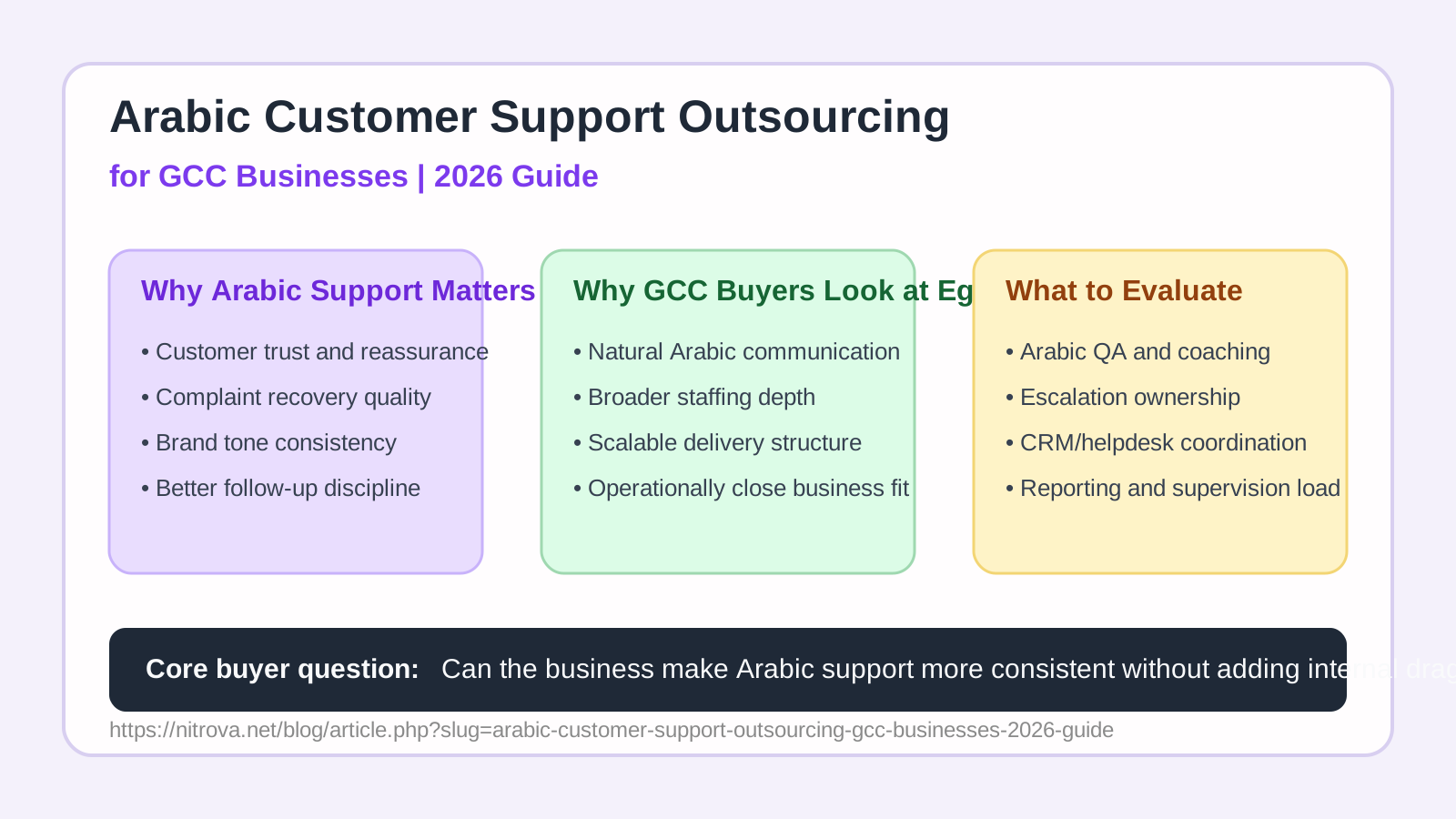
Why is Arabic customer support such a critical issue for GCC businesses?
Because Arabic customer support is not only a translation task. It affects how clearly the business explains itself, how confidently it handles complaints, and how naturally it maintains trust across customer conversations. In many GCC markets, weak Arabic support does not just slow service. It can make the business feel less reliable.
That is why Arabic customer support outsourcing for GCC businesses is a practical buying question in 2026. The issue is rarely whether Arabic matters. The issue is whether the current support model can deliver Arabic quality, consistency, and coverage at the level the business now needs.
When does Arabic customer support become a bigger operating problem than expected?
It becomes a bigger problem when leadership notices that support quality is shaping sales, retention, and complaint recovery more directly than expected. This often happens when customers need reassurance, explanations, follow-up, or escalation in Arabic and the internal team cannot keep tone and clarity stable across channels.
The problem is usually not language alone. It is language inside a growing support environment that also needs coverage, structure, and operational ownership.
Why do GCC businesses compare Egypt for Arabic customer support outsourcing?
They compare Egypt because it is often a practical base for Arabic-first customer support. The value comes from natural Arabic communication, broader staffing depth, operational flexibility, and business-hour compatibility with GCC companies. That combination matters when the business wants support that feels close to the customer rather than mechanically translated.
Egypt can be especially relevant when the company needs Arabic support to work across several channels or departments without turning every service gap into an internal escalation problem.
Is Arabic customer support different from general outsourcing?
Yes. Arabic customer support is different because tone quality matters more visibly. Customers often judge whether the business sounds competent, respectful, and reassuring from the first Arabic exchange. That makes consistency more commercially important than in many generic support setups.
For buyers, this means the question is not only whether a provider can answer in Arabic. The better question is whether the provider can preserve clarity, confidence, and brand tone across routine service, complaint handling, and follow-up communication.
What usually pushes GCC businesses to outsource Arabic customer support?
The pressure usually comes from a combination of service quality issues and operating strain:
- Arabic replies feel inconsistent across agents or channels.
- Complaint recovery depends too much on senior staff stepping in manually.
- Coverage gaps make customers wait or repeat themselves.
- Support teams struggle to keep follow-up disciplined in Arabic conversations.
- Growth adds complexity faster than the internal support model can absorb.
When these issues appear together, outsourcing becomes less about staffing volume and more about fixing support design.
Which GCC businesses benefit most from Arabic customer support outsourcing?
Businesses benefit most when Arabic communication plays a direct role in trust, conversion, retention, or operational continuity. That can include ecommerce, healthcare coordination, property-related services, education, logistics, technical support environments, and service businesses where customers expect reassurance and clarity rather than short transactional replies.
The stronger the Arabic conversation is tied to customer confidence or escalation recovery, the stronger the case for a better-structured Arabic support model.
How should buyers compare in-house Arabic support with outsourcing from Egypt?
They should compare the models based on service control, not only staffing ownership. The best model is the one that keeps Arabic quality stable while reducing operational friction for the business.
| Area | In-House Arabic Support | Outsourced Arabic Support from Egypt |
|---|---|---|
| Language consistency | Depends on current hiring and coaching quality | Can draw from a wider Arabic-speaking talent base |
| Coverage planning | Harder to widen without new internal layers | Often easier to structure around demand |
| Management burden | Higher day-to-day supervision inside the company | More structured delivery with ongoing governance |
| Escalation discipline | May stay informal if the team is small | Can be designed with clearer routing rules |
| QA and coaching | Must be built and maintained internally | Can sit more directly inside the service model |
| Scalability | Requires internal hiring and onboarding cycles | Usually more flexible around growth periods |
What should stay in-house and what can be outsourced?
The strongest model is often hybrid. Outsourcing Arabic customer support does not mean giving away every decision.
What often stays in-house:
- Policy ownership and final commercial judgment.
- Sensitive escalations and exceptional complaint decisions.
- Brand-level customer experience direction.
- Coordination with leadership or highly sensitive functions.
What can often be outsourced effectively:
- Daily Arabic customer conversations.
- Routine follow-up and queue progression.
- Complaint intake and structured first-line handling.
- Arabic-first inbox or ticket management.
- Support reporting and case discipline.
This usually gives the business stronger service structure without losing internal control over critical decisions.
What should buyers evaluate before choosing an Arabic support partner?
They should evaluate whether the provider understands Arabic customer support as an operating function, not just a staffing promise.
- How is Arabic quality reviewed and improved over time?
- How are escalations handled when reassurance or tone matters?
- How will the team coordinate with CRM, helpdesk, or internal operations?
- How are unresolved cases tracked and handed over?
- What reporting will leadership receive?
- How much internal supervision will still be required weekly?
It also helps to review the provider in the context of related capabilities such as customer support services, technical support, virtual assistance, and the company's broader operating background.
When does outsourcing Arabic customer support make more sense than expanding internally?
It usually makes more sense when the business needs stronger Arabic consistency, better coverage, more reliable follow-up, and less internal management drag than its current support setup can sustain. This often becomes clear when senior people are spending too much time correcting tone, recovering complaints, or filling coverage gaps.
If the current internal team keeps support running only through manual intervention, the issue is no longer temporary. It is structural.
Why might Nitrova fit GCC businesses evaluating Arabic customer support outsourcing?
Nitrova can fit GCC businesses that want Arabic-capable customer support from Egypt with clearer structure, stronger delivery discipline, and operating models built around real customer-support needs rather than generic staffing. The value is not only access to Arabic-speaking support. It is putting process, consistency, and service ownership around Arabic customer communication.
The fit is stronger when the business wants to keep policy control in-house while moving routine Arabic delivery into a more scalable model.
Final takeaway
Arabic customer support outsourcing for GCC businesses is not only about adding more agents who speak Arabic. It is about deciding whether Arabic customer communication is being managed with enough consistency, confidence, and follow-up discipline to support growth.
If support quality in Arabic is already affecting trust, complaint recovery, or management focus, outsourcing may be less about reducing workload and more about improving operating fit.
To assess the right model, share your current channels, Arabic support pressure, coverage expectations, escalation types, and internal service bottlenecks through Nitrova's contact page or by email at hello@nitrova.net.
Frequently asked questions
Why do GCC businesses outsource Arabic customer support from Egypt?
They often do it to improve Arabic quality, widen coverage, reduce internal management pressure, and build a more scalable customer support structure than an improvised in-house setup.
Is Arabic customer support different from general customer support outsourcing?
Yes. Arabic customer support places more pressure on tone, clarity, reassurance, and local business communication style, so language quality and consistency become more commercially important.
What should stay in-house even if Arabic support is outsourced?
Policy control, sensitive escalations, final commercial decisions, and brand-level customer experience ownership usually stay in-house even when daily support delivery is outsourced.
Which GCC businesses benefit most from Arabic customer support outsourcing?
Businesses benefit most when Arabic conversations influence trust, conversion, retention, complaint recovery, or operational continuity across channels.
What should buyers evaluate before choosing an Arabic support provider?
They should evaluate Arabic quality, coverage design, QA, escalation ownership, CRM or helpdesk coordination, reporting visibility, and how much internal supervision the model will still need.
How can Nitrova fit GCC companies evaluating Arabic customer support outsourcing?
Nitrova can fit GCC companies that want Arabic-capable customer support from Egypt with clearer structure, stronger delivery discipline, and support models designed around real operating needs.