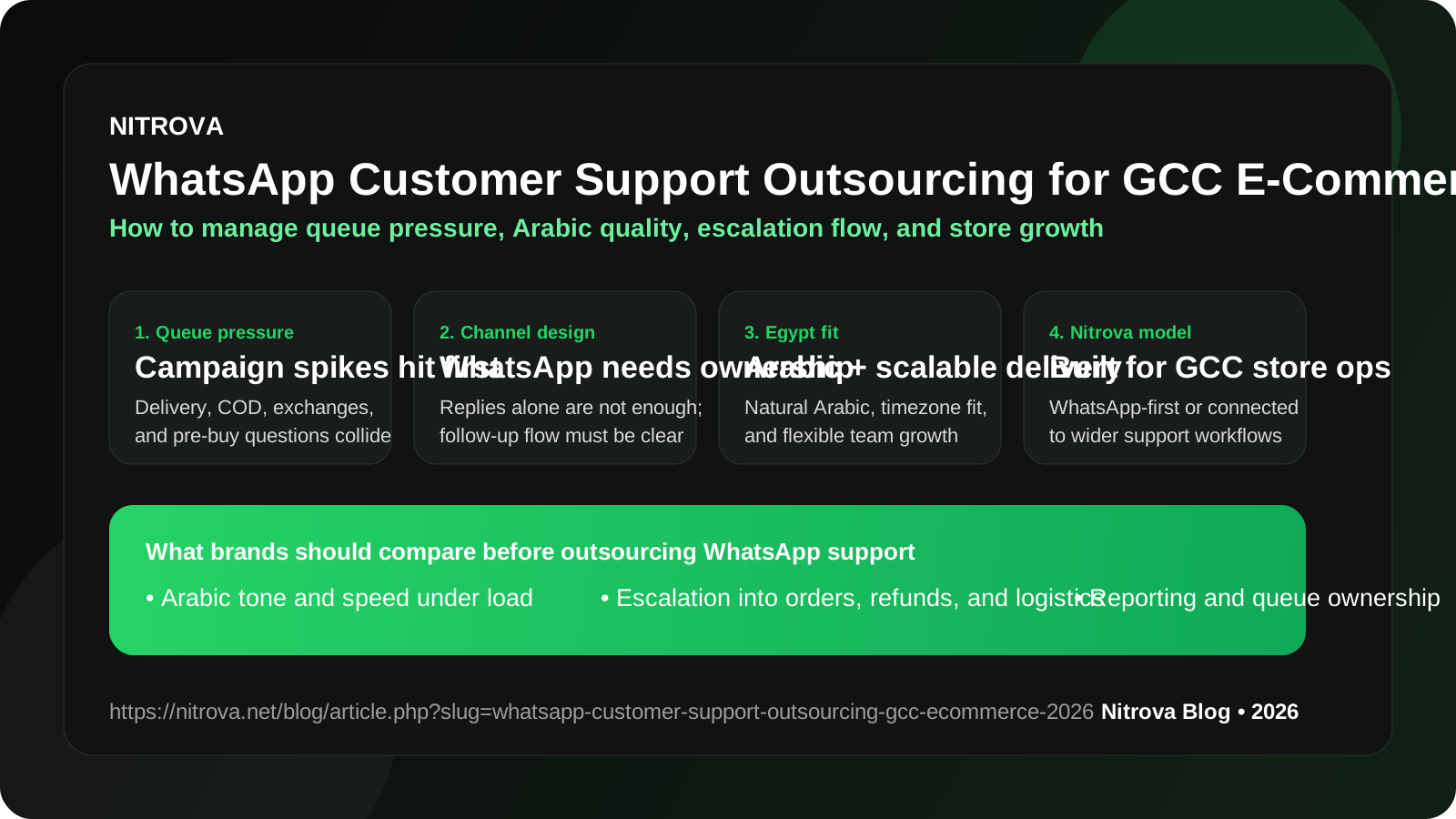
Why does WhatsApp become the first support bottleneck for many GCC e-commerce brands?
Because WhatsApp usually sits too close to the sale to be treated like a casual inbox. It absorbs pre-purchase questions, COD confirmations, delivery follow-up, address changes, exchange requests, and complaint recovery in the same thread. When campaigns work, the pressure lands there fast.
That is why many GCC e-commerce operators notice support stress in WhatsApp before they notice it in email or formal ticket queues. The real problem is rarely message count alone. The real problem is that the channel starts carrying commercial risk without clear ownership, escalation rules, or follow-up discipline.
WhatsApp customer support outsourcing becomes relevant when the channel starts behaving like an operating department rather than a side task.
When should a GCC e-commerce brand seriously consider outsourcing WhatsApp support?
A GCC e-commerce brand should seriously consider outsourcing WhatsApp support when internal handling is slowing down sales conversations, post-purchase follow-up, or customer recovery. If managers are stepping into chats manually, unresolved cases are buried in chat history, or the team cannot keep tone and speed consistent during busy periods, the channel is already under strain.
That decision is often less about headcount and more about operational control. If the current setup depends on personal phones, scattered ownership, or whoever is available at the moment, the brand is not really running WhatsApp as a managed support function.
Can a GCC e-commerce brand outsource only WhatsApp customer support?
Yes. A GCC e-commerce brand can outsource only WhatsApp support when WhatsApp is clearly the main pressure point. That is common when the business sees heavy pre-purchase messaging, COD confirmation work, delivery questions, and exchange requests through chat more than through email or phone.
The stronger model, however, does not leave WhatsApp isolated forever. The team handling the queue should understand order status, delivery rules, escalation ownership, and refund or exchange logic. Otherwise the brand may outsource replies without outsourcing actual queue discipline.
Practical rule: the best WhatsApp outsourcing model does not just answer faster. It gives the channel ownership, continuity, and structured follow-up.
Why does Arabic quality matter so much in WhatsApp support?
Because WhatsApp is one of the channels where tone quality becomes visible immediately. A customer asking about a delayed order, an exchange, or payment concern does not only judge whether the answer is technically correct. The customer also judges whether the brand sounds clear, natural, and reassuring in Arabic.
Weak Arabic quality usually creates operational damage before management notices it in reports:
- Customers repeat questions because the first answer did not resolve uncertainty.
- Simple delivery or COD cases become escalations.
- Brand tone becomes inconsistent across shifts or agents.
- Internal teams lose visibility when sensitive cases are handled informally.
That is why WhatsApp should sit inside a broader customer support operating model, not as a side inbox somebody checks between other tasks.
Why is Egypt a practical base for WhatsApp support outsourcing?
Egypt is a practical base because WhatsApp support depends on natural Arabic communication, scalable staffing, and close day-to-day coordination with GCC businesses. The advantage is not one factor alone. It is the combination of Arabic fluency, bilingual capacity when needed, timezone fit, and the ability to build coverage without forcing the brand into a heavy internal hiring cycle.
That matters most when the channel is tied to real operational flow, not just message handling. If the business needs WhatsApp to connect with order management, follow-up, escalations, and service consistency, the delivery model has to support those needs without becoming rigid.
How should a brand compare in-house WhatsApp support with an outsourced model?
The right comparison is not internal versus external in the abstract. It is unmanaged versus managed channel ownership. A brand should compare which model gives better control over coverage, escalation, quality, and reporting for the actual customer journey.
| Area | In-House Handling | Outsourced Handling from Egypt |
|---|---|---|
| Coverage design | Depends on current team availability | Can be designed around trading hours and peak windows |
| Arabic consistency | Depends on current hiring and supervision | Can draw from a wider Arabic-speaking talent pool |
| Scalability | Requires internal recruitment and onboarding | Can usually expand more flexibly around demand |
| Queue ownership | May be shared loosely across people or devices | Can be structured with clearer process ownership |
| Escalation discipline | Often relies on informal internal follow-up | Can be designed with explicit routing and handoff rules |
| Reporting visibility | Often weaker if chats are scattered | Can be centralized with clearer oversight |
What operating details should outsourced WhatsApp support include?
It should include more than polite replies. A practical WhatsApp support model for GCC e-commerce usually needs role clarity around what the team owns, what it escalates, and what systems or workflows it can access.
- Pre-purchase product questions and buying reassurance.
- COD confirmation and order follow-up.
- Delivery timing questions, address edits, and shipment-related handoff.
- Exchange, return, and refund guidance.
- Complaint handling and escalation ownership.
- CRM, ticket, or order-management handoff where relevant.
- Follow-up discipline so unresolved issues do not disappear inside chat history.
Where needed, buyers should also clarify whether the model is dedicated or shared, what hours need coverage, how peak periods are handled, how QA works, and where the boundary sits between customer-facing replies and back-office follow-through.
How can a GCC e-commerce operator decide whether outsourcing now makes sense?
Outsourcing now makes sense when the cost of disorder is already higher than the comfort of keeping the channel in-house. If the business keeps losing time to manual follow-up, inconsistent replies, scattered escalation, or weak visibility across customer conversations, the problem is no longer theoretical.
A simple decision framework is to ask:
- Is WhatsApp affecting conversion or post-purchase trust?
- Are managers or founders stepping in too often?
- Do unresolved cases depend on memory rather than process?
- Does the team struggle to maintain consistent Arabic tone during busy periods?
- Is the business entering growth phases that will increase message load further?
If several of these are already true, the discussion should move from whether to outsource at all to how the operating model should be designed.
How should brands think about cost without inventing savings numbers?
The useful cost discussion is not one salary versus one outsourced seat. It is the total operating burden of running the channel properly.
That means looking at questions like recruitment effort, supervision time, replacement risk, QA discipline, reporting needs, tooling, and the cost of slow or fragmented follow-up. A cheaper-looking setup can still be the more expensive one if it creates avoidable management drag or weak customer recovery.
For that reason, providers should be judged on channel ownership, operational discipline, reporting visibility, and fit with the actual ecommerce workflow, not on a low monthly figure in isolation.
What should a brand check before choosing a WhatsApp outsourcing partner?
A brand should check whether the partner understands how WhatsApp fits into the real customer journey, not just how to answer chats. The strongest questions are the practical ones that expose operating design.
- How is Arabic communication quality reviewed and improved?
- How are peak traffic periods handled?
- What is the escalation path for delivery, refund, complaint, or technical issues?
- How are unresolved conversations tracked and handed over?
- What access or workflow exists for CRM, helpdesk, or order-management coordination?
- How is brand tone maintained without making conversations sound robotic?
It is also reasonable to review related service context such as Nitrova's customer support services, virtual assistance support, and company background before deciding whether the operating fit is strong enough.
Why might Nitrova fit this use case?
Nitrova supports GCC businesses building customer support capacity from Egypt with emphasis on Arabic communication, operational consistency, and service structures that align with how the business actually runs. For e-commerce brands, that can make WhatsApp support part of a broader support workflow rather than an isolated inbox problem.
The fit is stronger when the business wants clearer queue ownership, more stable Arabic communication, and a better-structured customer support layer without immediately expanding its internal team in a rushed way.
Final takeaway
WhatsApp customer support outsourcing is not just a staffing question. It is a decision about whether one of the most commercially sensitive channels in the business is being run with enough ownership, consistency, and process control to support growth.
If WhatsApp is already carrying campaign pressure, COD follow-up, delivery confusion, exchange requests, and manual manager intervention, then the better question is not whether the channel matters. It is whether the current operating model is still good enough.
If you want to evaluate the right setup, share your current channel mix, approximate message pressure, required coverage hours, and the operational issues creating the most friction through Nitrova's contact page or by email at hello@nitrova.net.
Frequently asked questions
Can a GCC e-commerce brand outsource only WhatsApp customer support?
Yes. A brand can outsource WhatsApp as a standalone channel first, especially when message volume is the main pressure point. The stronger model usually connects WhatsApp to the wider support workflow later.
Why do GCC e-commerce brands struggle with WhatsApp support specifically?
Because WhatsApp combines speed, customer expectations, campaign spikes, post-purchase questions, delivery follow-up, and exchange requests in one channel. Without ownership and process discipline, it turns into a high-noise queue very quickly.
Why is Egypt a practical base for WhatsApp support outsourcing?
Egypt offers native Arabic communication, bilingual talent where needed, timezone overlap with the GCC, and the ability to scale teams without forcing brands into a heavy internal hiring cycle.
Should WhatsApp support sit separately from the rest of customer support?
Usually no. Even if it begins as a separate queue, it should connect to order status, refund logic, delivery coordination, and other support channels so customers do not have to repeat themselves.
What should a brand check before choosing a WhatsApp outsourcing partner?
Arabic communication quality, response handling under peak load, escalation discipline, CRM or order-system handoff, reporting visibility, and whether the team can match the brand's tone without sounding scripted.
Can Nitrova support Arabic and English WhatsApp communication for GCC stores?
Yes. Nitrova can support Arabic-first or bilingual customer conversations for GCC-facing e-commerce brands, depending on target markets and customer mix.